
5 out of 5 stars.
As Victor Frankenstein himself may attest, reanimating corpses is no easy job. But screenwriter and director Guillermo del Toro was able to stitch it all together, breathing new life into the gothic tale “Frankenstein,” creating a faithful and moving adaptation.
Del Toro’s “Frankenstein” was released in theaters on Oct. 17 and will be available for streaming on Netflix starting Nov. 7. His signature dark fantasy style and striking visuals paired with iconic actors Jacob Elordi, Oscar Isaac and Mia Goth helped make this film a definite contender for a few Academy Awards.
Del Toro is known for his use of practical effects and physical sets as opposed to CGI and green screens. The settings left me speechless, displaying an intricate, elaborate and immersive 19th century gothic
“Frankenstein” is my personal favorite novel, and it saddens me that adaptations typically don’t follow Mary Shelley’s 1818 story too closely — until now.
Throughout the film, the creature questions his purpose and eventually learns the sad truth that he is not human, but a science experiment. Elordi conveys heavy melancholy in the discovery, and I was shocked to find myself crying. Even when limited to silence in a scene, Elordi’s facial expressions and breathing patterns convey such emotion and vulnerability.
Each character has their unique costuming style, but a standout is Mia Goth’s character, Elizabeth. Elizabeth remarks that she cares deeply about nature, and her whimsical wardrobe reflects that, boasting giant feathered headdresses and poofy ballgowns with swirling designs reminiscent of the cosmos.
Also, I’m calling it now: costume designer Kate Hawley will be nominated for Best Costume Design at the Oscars. If she’s not, I’ll lose all faith in the Academy Awards. — just kidding, that happened a long time ago. Hawley’s costuming is one of the strongest points of the film.
This film does not conform to the epidemic spreading through the film and TV industry of dull, dark color palettes. Dan Lausten, director of photography, blends eerie shadows with whimsical highlights to create a world full of dynamic lighting. The use of warm colors versus cool ones effectively contrasts the Victor’s comfort with the fear of his creation.
One scene that stood out for its color and lighting was a scene in which the creature’s pale skin reflected some of the green light of the storm overhead, an obvious callback to his green likeness in traditional adaptations.
Whereas most adaptations demonize the creature to fit into formulaic horror conventions, del Toro invites watchers to sympathize with him and question if evil is a product of nature or nurture. He does not neglect the fact that Mary Shelley wrote the creature into being articulate and vastly intelligent. The creature even reads “Paradise Lost,” which is integral to the original story. Book fans rejoice!
The non-linear editing style mirrors the format of the book and prevents scenes from feeling boring. Any time the film starts to slow, it cuts back to present-day on the ship and reminds us that everything happening is a flashback.
The final scene is a wide shot of the creature shedding a single tear as he stands watching the sun set on the vast frozen sea. It’s a full circle moment; his first day of life he watched the sun rise, and now he is closing a chapter on his “monsterhood.” He has forgiven his creator but abandoned him to start anew. The scene is gut-wrenching, bittersweet and ambiguous, just like the novel.
Given that del Toro’s film feels like it was taken straight from a picture book, I predict multiple Academy Award nominations. Go see “Frankenstein” now so you can claim you were a fan before it won big.
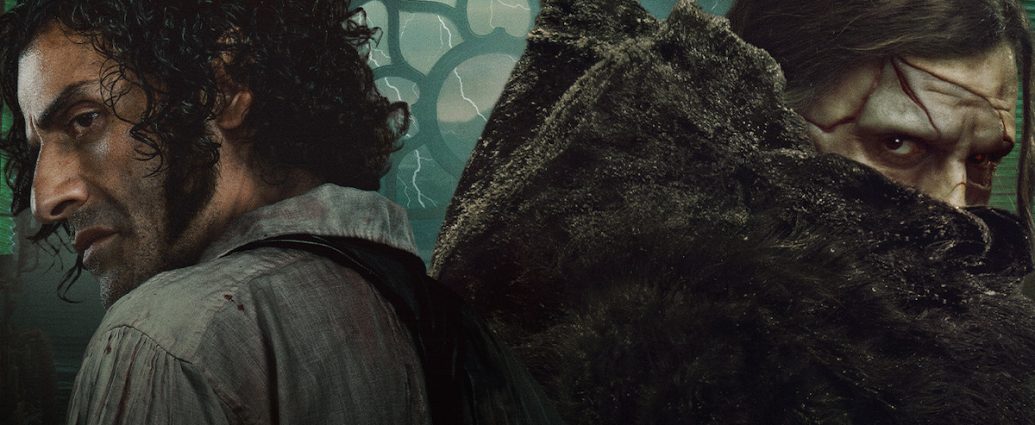
Guillermo del Toro’s “Frankenstein.” Photo from Netflix.