
I’m not sure if this is a hot take or not, but it is paramount to the development of every child that they participate in athletics at some point in their lives. If you’re unsure why, here’s just a couple reasons.
Physical Benefits of Youth Sports
In 2024, the CDC published a study that found the childhood obesity rate in the United States was 19.7%, with one in five children struggling with obesity.
On top of that, more than two in five U.S. adults reportedly struggle with obesity, so an emphasis on physical activity has never been more prevalent.
Participation in youth sports has proven to lower risk of future illness, promote greater development of cognitive skills like hand eye coordination and functional movement, and improve development of bones, muscles, ligaments and tendons.
So not only do kids who participate in sports have a better chance of avoiding long term obesity but also develop slightly faster than kids who don’t.
Psychological Benefits of Youth Sports
The physical benefits of sports have been well documented, but what about the mental side of things?
In an era where kids are spending more time indoors, mental health challenges among adolescents are becoming incredibly prevalent.
The good news is that there is strong evidence that participation in sports during developmentally formative years can have an extremely positive effect.
Some of the psychological benefits of youth sports include lower stress levels, lower rates of anxiety and depression, greater self-confidence and higher self-esteem.
By encouraging children to get involved in sports, we’re not just helping them stay active, we’re equipping them with tools that can positively shape their mental health and self-perception for years to come.
Lessons along the way
Sports have a unique way of teaching lessons that not many other outlets can do.
One of which is how to lose and handle adversity – two things that are unavoidable not just in athletics, but in life.
Growing up as an athlete, there were countless times I came home in tears after a tough loss and
I had to learn that losing is simply part of the game. It’s inevitable and it taught me that you can’t let it break you every time. If anything, it should build you up.
Adversity knocked on my door more times than I can count during my athletic career, but one of the biggest was during a position battle in high school.
I had to learn the importance of hard work, discipline and resilience. Through those traits, I was able to earn the starting first base spot and those are traits I still hold firmly to this day.
Sports taught me countless life lessons and prepared me for the realities of life beyond the field. They taught me how to work in teams, that mistakes are where you learn, practice is how you improve and leading is often just as important as following.
Companionship and the opportunity for lifelong friendships
With the significant physiological benefits, my favorite thing about sports is the friendships that come along with them.
We’ve already covered that kids are spending more time inside, but the beautiful thing about sports is it forces them to be outside – it forces them to connect with other kids.
I met all my best friends playing youth sports. The same people who are going to be groomsmen at my eventual wedding are the same people that I met when I was eight years old playing youth hockey.
I’m not saying sports necessarily guarantee lifelong friendships, but they create the kind of environment where those bonds can form.
I’ve made thousands of memories with those friends that would not have happened without sports.
When taking everything into consideration, participation in sports shouldn’t be viewed as optional, but rather as a necessary part of growing up. The benefits are simply too important to ignore, making athletics an essential experience for every child.
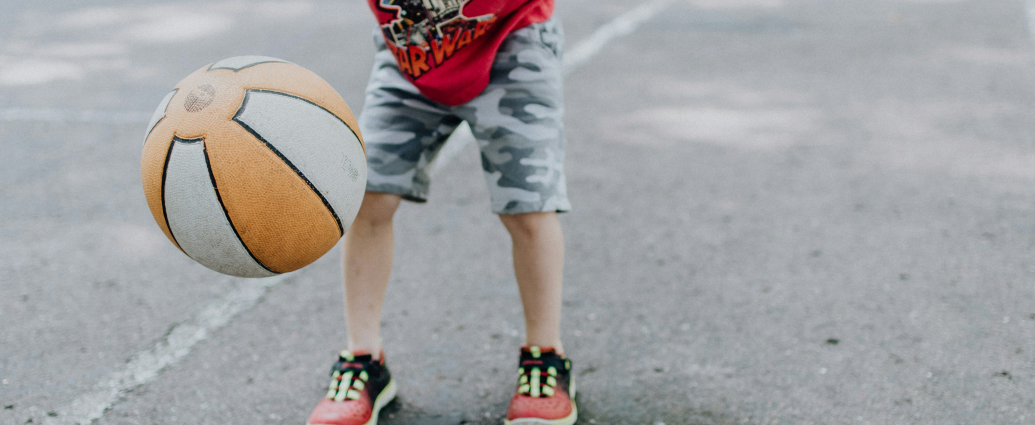
A boy dribbles. Photo by Kelly Sikkema on Unsplash.