
In March, the Wellness Center conducted the 2025 National College Health Assessment (NCHA) to collect data about UCCS students’ habits and behavior, including general wellbeing, academic impediments, mental health, safety concerns, sexual health and alcohol and drug use.
According to the Assistant Vice Chancellor of Health and Wellness Benek Altayli, the data informs program development and support services offered.
Exactly 1,385 students — 14.5 percent of the population — participated in the survey. Most demographics are represented fairly, but military students are slightly under-represented while female students are slightly over-represented.
General wellbeing
Approximately 45.4 percent of surveyed UCCS students described their health as excellent or very good, slightly lower than the national average of 52.2 percent.
Around 61.5 percent of UCCS respondents reported that they felt they belonged, however, LGBTQ+ students reported significantly less belongingness than cisgender and heterosexual students, according to Altayli.
About 62.3 percent of UCCS respondents reported that they felt their health and wellbeing were a priority at UCCS, which is almost a 10 percent increase from the last time the survey was conducted in 2023.
The Gallogly Center interprets this data as evidence of a shift in the campus culture regarding health and wellness from 2023.
“Students seem to be seeing a shift in our campus culture around wellbeing and are recognizing that their health and wellness are important to our campus leaders,” Director of Wellness Promotion Chrissie Bailey and Altayli said.
About 48.7 percent of UCCS respondents reported food insecurity, which is similar to the national response.
Exactly 45 percent of UCCS respondents reported they would not have easy access to nutritional, health and mental health services, and 22.3 percent of UCCS respondents reported their ability to stay in school would be significantly impacted without the Wellness Center.
Academic impediments
According to Altayli, this section of the survey includes students’ reports on negative impacts to their class performance and factors delaying progress toward their degree(s).
Around 39.2 percent of respondents reported stress, which is slightly lower than 2023, but higher than the national average of 35.8 percent and 35.2 percent of respondents reported anxiety, which is also higher than the national average of 29.5 percent.
Similarly, the percentage of students experiencing depression decreased from 26.5 to 23.2, however, the national average of students experiencing depression is 19.5 percent.
For most categories, UCCS had higher percentages than the national average, including finances, career, family, intimate relationship violence and health of a loved one. According to Bailey and Altayli, this may be the effects of the school housing more of an underprivileged student body than the national average.
“I’m not sure our answer could go much beyond conjecture… [but] when we look at the first generation, Pell Grant eligible, majority working profile of our students, we think our students live in environments that have many more stressors than the students in the national average… ” they said.
“This just means we need to work harder to try to make up for that resource gap to make sure we do everything in our power to minimize our students’ apparent disadvantages,” they concluded.
Mental health
Approximately 50 percent of students reported feelings of loneliness. LGBTQ+ students, students of color — excluding Hispanic students — and students with a chronic health condition reported greater loneliness.
Approximately 20 percent of surveyed UCCS students reported serious psychological distress, which is measured by the Kessler 6 (K6) Non-Specific Psychological Distress Score and factors nervousness, hopelessness, restlessness, sadness and fidgety behavior.
About 50.9 percent reported moderate stress, and 29.1 percent reported high stress.
Around 31.9 percent reported suicidal ideation and 2.3 percent reported having attempted suicide in the last year. Suicidal ideation ranges from vague, nonspecific, fleeting thoughts to repetitive thoughts and a plan, according to Altayli.
“The percentage of students reporting suicidal ideation is always concerning, but the gap between ideation and attempts is widening for our students, which indicates our suicide prevention efforts are helping,” she said.
The suicide data in 2023 influenced the university to contract TELUS Health to bring in 24/7 crisis and counseling services. The Wellness Center also began hosting monthly suicide prevention workshops.
Safety concerns
According to the assessment, 78.4 percent reported feeling very safe on campus during daytime, although white students feel safer than students of color.
From 2023 to 2025, there was approximately a 10 percent increase in students that reported feeling safe on campus at night. 34.1 percent of students reported feeling very safe, however, LGBTQ+ students, women and students with a chronic health condition feel less safe during day and night
In response to the 2023 safety data, the university increased trainings, workshops and tools for students and employees –such as the Bystander Intervention Workshop, according to Bailey and Altayli.
Around 10.6 percent of surveyed UCCS students reported having experienced a verbal threat. Less than 5 percent of students reported experiencing stalking, sexual harassment or rape.
Sexual health
Nearly half of surveyed students have had vaginal sex in the last 30 days. Of these
students, 24.1% percent did not use a condom, and 11% percent did not use any pregnancy prevention method whatsoever (excluding those who did not want to prevent pregnancy).
Over the last two years, the Gallogly Recreation and Wellness Center has created Sex Week to promote sex education and safe sex. Sex Week 2026 is from Feb. 17 to 19.
Alcohol and drug use
At the time of the survey, 62.6 percent of surveyed UCCS students reported alcohol use, 25.1 percent reported cannabis use and 22.3 percent reported tobacco use in the last three months.
Around 15.2 percent of the students who reported alcohol use and 35.2 percent of the students who reported cannabis use also reported driving under the influence.
Students with excellent or very good health reported less alcohol and cannabis use than students with good/fair/poor health, according to Altayli.
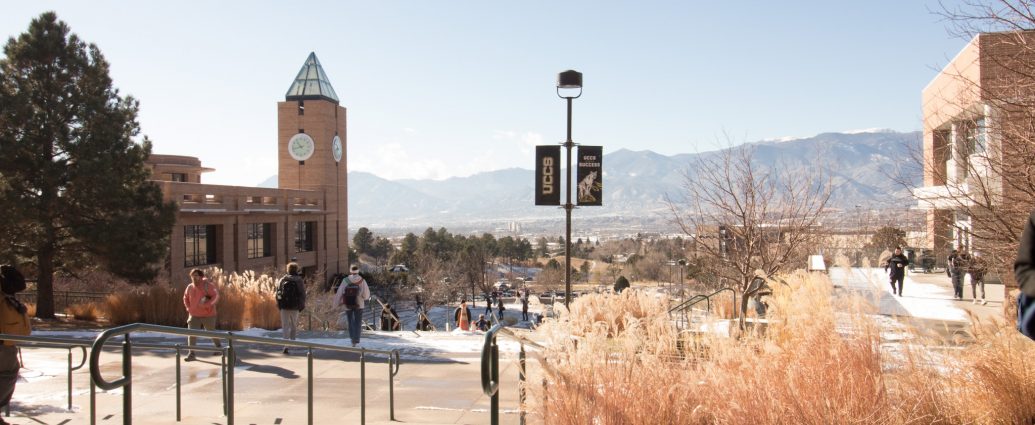
Students walk during a passing period. Photo by Anysia Hovel.