
Walking around Colorado Springs’ modest downtown might give a tourist the impression that Colorado Springs is quaint, sleepy and — above all — small. The iconography of “Small Town USA” litters the Springs, present in its restaurants and its country-themed clubs. However, as the Springs continues to expand in size, these symbols inch farther away from genuine and closer to cosplay.
Colorado Springs’ carefully cultivated image is at total odds with its population of nearly 490,000 people, a figure that climbs with each passing year. Why does Colorado Springs insist on maintaining a small-town vibe, even as its population begins to strain its seams? The Springs needs to lean into the fact that it isn’t a one-horse town anymore; doing so would make it a much better place to live.
I am a Colorado Springs resident, born and raised. I can appreciate all the wonderful things about this city, but I also know that Colorado Springs’ population dysmorphia is stopping it from reaching the potential I know it has.
Small town mindset, big town needs
One problem with Colorado Springs’ anxiously guarded small-town identity is the fact that the city is not building infrastructure to reflect the true size of its population. Colorado Springs’ pitiful public transportation system has made the Springs a “transit desert,” according to the Colorado Sun. Springs residents without vehicles struggle to navigate an ever-expanding network of major roads and highways.
Thousands of people are cut off from grocery stores and community centers. Unmet needs abound in Colorado Springs, with 10.1 percent of the population without access to public transportation services.
According to the Colorado Sun, a lack of transportation has contributed to Colorado Springs’ status as one of the worst food deserts in the country. Because of limited public transit, minor events like the closure of a single King Soopers could mean a complete loss of access to fresh food for hundreds.
Colorado Springs’ infrastructure problem has dire consequences for the people that live here. The Springs should drop the rural act and focus on initiatives that make it possible to live here. If the city accomplishes this, it might actually become fun to live here.
Lights out at 8
In 2024, the United States Census Bureau reported Colorado Springs’s population at 493,554. For context, this population size is on par with Miami, Florida. While similar in size, it can hardly be said that Colorado Springs is anywhere near Miami in terms of its nightlife, restaurants or activities.
According to CBS News, Colorado Springs is “praised for its small town feel despite being one of the biggest cities in the state.” So far, this point of pride for the Springs has allowed it to resist the call of adding to its two-block downtown.
The chief complaint I hear about Colorado Springs is that there’s nothing to do. If you aren’t able to pack up the car and drive an hour into the mountains every weekend in the winter, it can feel like this city has very little to offer you.
The best thing about Colorado Springs shouldn’t be leaving it to go to slopes; it should be the businesses, events and activities offered around town. An overemphasis on outdoor activities makes the Springs feel lopsided, with missed opportunities to showcase the talent that resides here in favor of hiking, hiking and more hiking.
Colorado Springs should build more restaurants and businesses to accommodate its growing population. This city should get comfortable with building up a more robust club scene, and with promoting more events for young people.
Pouring more energy into the city’s amenities would not only add vibrancy and introduce more culture; it would be a great way to appeal to members of the community that stay up later than 8 p.m.
There’s a lot to love about the Springs. However, it’s time to take off the Podunk costume and get real about the people that call this place home.
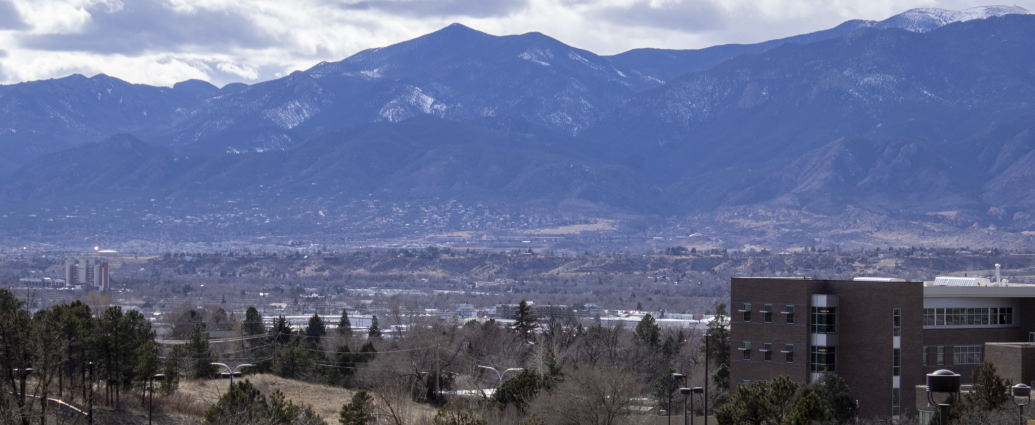
A view of downtown from campus. Photo by Jade Esquibel.