
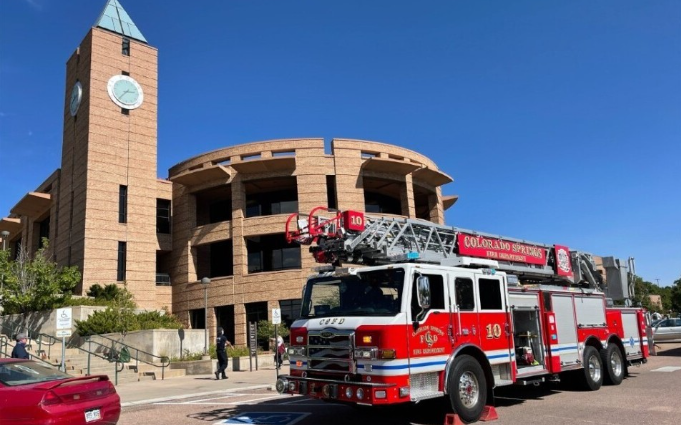
On March 4, UCCS held a lockdown drill from 4:05 to 4:20 p.m. to evaluate emergency preparedness in case of an active threat on campus. If a threat were to occur, it’s essential that students understand what is expected of them.
Emergency actions include, but are not limited to, a lockdown, evacuation, shelter-in-place, avoid the area and run, hide, fight.
Lockdown
In the event of a lockdown, students are asked to stop what they are doing immediately and remain confined to a single room or area, according to Cynthia Norton, the interim emergency manager.
All doors and windows should be locked, and students should remain out of view while they await further instruction from law enforcement.
Evacuation
An evacuation is a temporary, quick removal of people from either an entire building or a portion that is deemed dangerous. Evacuations can happen in the case of a fire, gas leak or other hazardous situation.
Elevators should not be used in an evacuation.
Shelter-in-place
A shelter-in-place indicates a threat is outside, so students are expected to remain inside. Generally, this is used for environmental hazards, but it can also be used in criminal threats. For example, the shelter-in-place that was announced shortly after gunshots were fired on campus in January.
Avoid the area
This means there is a threat on or near campus, so students should avoid the area mentioned in the alert to remain safe. Students who are already on campus or near the threat will be directed to either evacuate or shelter-in-place, depending on the threat.
Run, hide, fight
This is the recommended response in the case of an active shooter, or similar life-threating situation on campus. Per instructions, students should first try to escape the area, but if running is not possible, students should hide.
Similar to a lockdown, students should lock all doors and windows and remain out of sight while hiding. If found, students are expected to defend themselves by incapacitating the threat.
There are also different types of drills that students may encounter on campus: tabletop exercises, simulations, full-scale drills and safety drills.
Tabletop Exercises
Tabletop exercises are large-group conversations to discuss the process of a drill in a low stake, educational environment, which allows brainstorming and incorporating technological advances to drills.
At UCCS, these conversations typically held with Facilities, the UCCS Police Department and university leadership teams.
Simulations Drills
Simulation drills mimic real-life scenarios without acting them out.
“If I need barricades, we don’t actually physically go and get the barricades. We simulate that we would have gone, and it would take us three hours,” Norton said.
Full-Scale Drills
A full-scale drill is practice for emergency situations. They include actors, controlled conditions and retrieval of resources.
Full-scale drills ensure safety drills, tabletop exercises and simulation drills are properly preparing UCCS officials to respond to an emergency.
Safety drills
Safety drills are similar to full-scale drills, but they are routine and focus on specific situations, like an active shooter, lockdown, shelter-in-place and fire drill.
Active shooter drills train students on how to properly respond and protect themselves in the event of an active shooter while lockdown and shelter-in-place drills teach students what to do if a threat is identified on campus.
Fire drills prepare students for a fire on campus, which can range from a small fire in a dorm room to combustible materials in a lab.
According to Norton, students are responsible for ensuring they receive alerts to stay safe.
Students can learn how to register their mobile number with UCCSAlerts here for real-time updates, although students will also receive an email in the event of an emergency.
To bypass do not disturb settings there is 67283 and 22678 that if programmed in your phone alert you through any restricting settings.
A firetruck on campus. Photo by KOAA.