
On Sept. 14, UCCS hosted the first session of the Strategic Spotlight series, which focused on the campus’s four core pillars: sustainable and strategic growth, research and creative excellence, organizational excellence and a culture of care.
According to Chancellor Jennifer Sobanet, the pillars are meant to focus energy on the Strategic 2030 plan. “These pillars help focus the choices that we make, the partnerships that we form and the ways that we serve our students and our community across the campus,” she said.
According to the Vice Chancellor of the Office of Strategic Initiatives, Robin Parent, the Office of Strategic Initiatives launched the Strategic Pillars Action website to explain ongoing projects and initiatives and how they relate to the four pillars.
“Our mission is simple but powerful, to help our campus move from vision to action with an inclusive lens,” Parent said.
According to Leya Schnitter, the program manager of the office of strategic initiatives, each pillar has a page on the website where users can find an explanation of the pillar and the related projects.
Users can also view all the initiatives by selecting ‘Search Initiatives’ and scrolling past the selection of UCCS colleges. According to Schnitter, there are currently 32 initiatives listed on the website.
Pillar One: Sustainable and Strategic Growth
Pillar one refers to “growth that strengthens enrollment, expands in-demand academic programs, and strives for affordability for students.”
At the Strategic Spotlight series, Wendi Clouse, the chief enrollment strategist, discussed the 2025-2030 Strategic Enrollment Plan (SEP) and how it connects to pillar one. The SEP is designed to “improve student outcomes, stabilize and grow our enrollment sustainably and align our growth with workforce needs,” according to Clouse.
The plan includes three initiatives: Slate CRM, generative AI and Nearpeer, the student retention program.
According to the website, Slate CRM replaced Salesforce to “streamline recruitment, admissions, and communication workflows.” Slate has increased application engagement by 30 percent and quickened admissions decisions by 25 percent, according to Clouse.
The generative AI, named Claudia, was launched in May of 2025. According to Clouse, Claudia brings in approximately 300 “warm leads” a week. Clouse defined warm leads as “prospective students reaching out to [UCCS] for information, rather than us marketing to them.”
According to previous Scribe reporting, Nearpeer is a third-party app that incoming students can use to meet other incoming students and connect over academic and recreational activities. Clouse accredited UCCS’ significantly higher retention rate, from an average of 67 percent to 70.4 percent, to this app.
Pillar Two: Research and Creative Excellence
Pillar two refers to the “discovery, creativity and innovation” among UCCS members that produce “research and creative works that strengthen learning and address pressing community challenges.”
At the Strategic Spotlight series, Seth Porter, the dean of the Kraemer Family Library and chief innovation officer in C3, discussed the launch of the Faculty Fellows, a C3 Innovation program.
According to previous Scribe reporting, C3 Innovation is a program meant to connect UCCS and its affiliates with the CO Springs community by diffusing innovative plans and ideas through the community. As explained by Porter, the Faculty Fellows program is an opportunity for the 14 participating faculty members to create cross-disciplinary projects that increase collaboration and innovation capacity across UCCS and the CO Springs community.
“When I think of the greatest universities in the world, they’re the universities that are taking the expertise of those in the university and applying it to the local communities,” Porter said.
A description of the ongoing projects can be found here.
Pillar Three: Organizational Excellence
According to the website, organizational excellence includes “streamlining processes, using accurate data for decision-making, and aligning resources responsibly” to ensure UCCS is operating transparently and efficiently.
At the Strategic Spotlight series, Lillian Hogan, the program director of residential excellence and retention, discussed 360 CARE Service Excellence Program, a customer service training program that emphasizes the need to serve all members of the UCCS community, not just students.
The program created the slogan “I Care,” which stands for innovation, connection, accountability, respect and excellence.
According to Hogan, the program is hosting a service excellence training for staff members on Nov. 13. The program is developing training sessions for student leaders and faculty members.
Pillar Four: Culture of Care
Pillar four refers to UCCS’ commitment to build a community based on “care, respect and inclusion” by prioritizing professional growth, well-being and belonging.
At the Strategic Spotlight series, Nicole Weis, the director of healing and community at the Lyda Hill Institute for Human Resilience, presented the Milestones Resilience Care center which was created to provide whole-person care to traumatized individuals. Whole-person care includes restoring the patient’s physical well-being, emotional balance and connectedness with others.
“At the core of our approach is respect for one’s own inner compass in directing the path and pace of their own healing journey,” Weis said.
The center has served over 91 clients since its launch two years ago.
The next Strategic Spotlight series will be held on Nov. 20 from 2-3 p.m. in Berger Hall. This event will highlight pillar one and other initiatives associated with it.
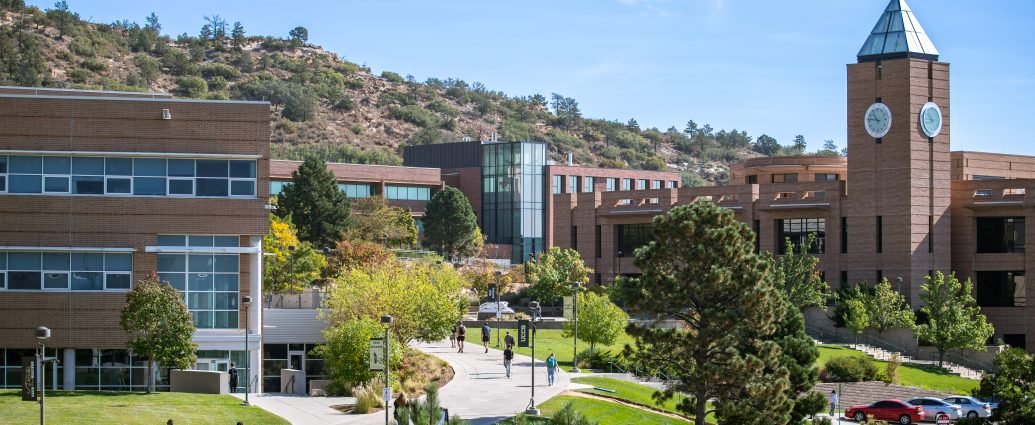
Photo via the Scribe archives