On Oct. 22, UCCS celebrated its 60th anniversary at the 2025 State of Campus Address. Chancellor Jennifer Sobanet and other campus leaders spoke about UCCS’ milestones and vision for the future.
“Sixty years ago, this university was just an idea, a bold response to critical needs. Today, it shines as a story of partnership and transformation. Our diamond anniversary is more than a number. It is a reflection of the brilliance, resilience and impact that this campus has cultivated over six decades,” Sobanet said.
Milestones
Campus leaders celebrated the achievements of the 2024-2025 academic year, noting the campus’s dedication to student support, innovation and community building, despite a decrease in state funding.
According to Sobanet, UCCS is $500,000 away from creating a $100 million endowment. More than half of the endowment will go toward student scholarships.
Provost Lynn Vidler highlighted academic, research and education milestones. Faculty researchers secured more than $12.5 million in sponsored programs grants while arts and humanities successfully created 75 artistic works and exhibits.
Over 40 new online courses were launched through CU President Todd Saliman’s initiative to expand digital learning to meet student needs and provide greater flexibility for off-campus students.
Over 4,200 people donated to UCCS during the ‘24-25 academic year. Donations include $100,000 in 24 hours during the first Carry the Light Giving Day in April and over $16,000 for Clyde’s Cupboard during the 2024 CU Food Fight.
UCCS also secured a five-year, $1.3 million TRiO grant to support first-generation and low-income students and students with disabilities via tutoring, academic and career advising, peer support programs and other services.
The Executive Director of Athletics Nate Gibson highlighted the record-breaking year for UCCS athletics and celebrated the success of student athletes in the classroom and community.
Four conference championship teams won conference titles, 10 athletic programs ranked regionally or nationally in the NCAA and 13 of the 14 athletic programs competed in postseason conference tournaments.
This fall, five programs are nationally ranked. Volleyball is first place in the conference and has a current record of 16-2. Women’s soccer and women’s cross-country have consistently ranked in the top 10 nationally. Men’s cross-country is currently ranked at 15 and men’s soccer is currently ranked at 22.
SGA President Aidan Burke celebrated student leadership and engagement, highlighting the record voter turnout in spring elections, growth in student organizations and an increase in student engagement at campus-wide events like Homecoming.
“For every student here today, as well as anyone watching online, to create a vibrant campus culture, you have to be part of it. I encourage you to join a club, attend a game, or if needed, start something new, because UCCS is what we make of it,” Burke said.
Future
The Differentiator Project focus groups hosted by the Office of Strategic Initiatives in the fall 2024 and 2025 semesters allowed students, faculty, staff, alumni, donors and community partners to provide feedback about UCCS to implement into future planning.
In alignment with the 2030 Strategic Plan, UCCS leadership plans to set specific priorities each year to continue student engagement, focus on resources and promote growth by supporting the needs of the campus community.
In September, the Office of Strategic Initiatives launched the Action Website to track the progress of initiatives that align with any of UCCS’ four core pillars: sustainable and strategic growth, research and creative excellence, organizational excellence and a culture of care.
“As we look to the future, it is clear that the world is changing, and we must adapt to meet the needs of our students… It’s by working together that we will create a future filled with possibilities for our students,” Sobanet said.
History
UCCS was founded in 1965 after former Colorado Governor John A. Love signed legislation granting the University of Colorado custody of the Cragmor Sanatorium, now Main Hall, which was sold to the university for $1 by George J. Dwire.
Registration opened in June 1965, and tuition cost $13 per semester hour, or $143 for full-time resident students and $517 for non-residents. The library opened in July on the second floor of Main Hall, with 4,000 books for 1,670 students, all of which were commuter students in the fall 1965 semester.
Over the next five years, the university celebrated its first graduation ceremony, the establishment of the student newspaper and work-study positions, a library remodel and expansion, student election, on-campus play, on-campus chamber concert, scholarship award, student-run publication and other integral parts of current UCCS campus life.
In 1972, UCCS became a distinct campus in the CU system and offered two undergraduate degree programs — engineering and business. Now, UCCS offers more than 70 undergraduate and graduate degrees across six colleges.
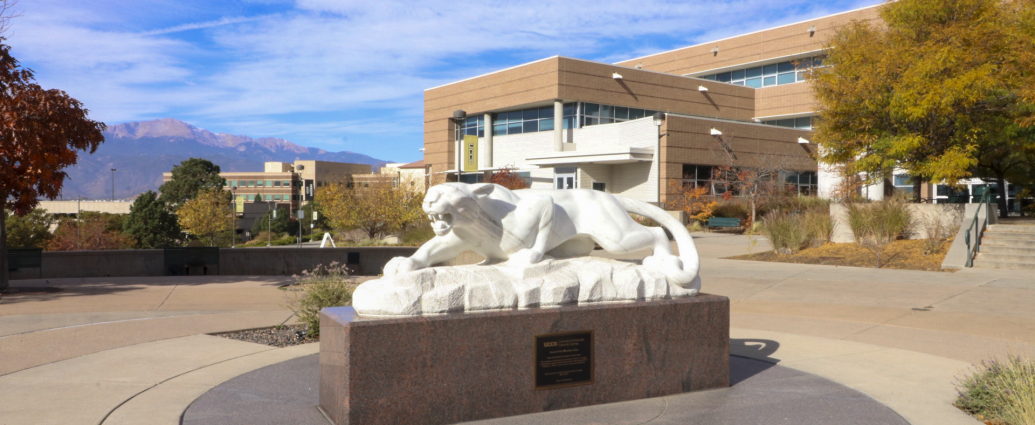
The Clyde statue. Photo by Anysia Hovel.