
From March 9-April 13, UCCS hosted four town halls in Berger Hall to discuss the budget and address concerns from students, faculty and staff over the potential implications to members of campus.
Each town hall included a Q&A session where attendees could directly talk to members of the senior leadership team (SLT).
The SLT includes Chancellor Jennifer Sobanet, Interim Vice Chancellor for Administration and Finance Jeff Greene, Interim Vice Chancellor for Enrollment Management and Student Affairs Stephanie Hanenberg, and Vice Chancellor of Strategic Initiatives and Chief of Staff Robin Parent.
Questions were taken from audience members and those who attended via Zoom.
Budget updates
On Jan. 30, the University Budget Advisory Committee (UBAC) announced that the campus was facing a $27 million budget gap that would require about a $11.8 million reduction in the 2026-27 fiscal year (FY).
According to Sobanet, the gap was caused by increased competition and operating costs, unfunded mandates as well as heavy reliance on tuition revenue.
“Only about 8% of our overall expense budget comes from the state of Colorado, so when enrollment changes, our revenue changes,” she said.
According to Greene, UCCS has decreased the initial $11.8 million reduction by nearly $10.3 million, meaning the university now faces a reduction of about $1.6 million.
The SLT decreased the reduction by nearly $8.7 million from unallocated base funds, operating funds, position vacancies, at-will filled positions that will be terminated and approximately $1 million from the colleges and Kramer Family Library.
The colleges cut $467,000, and additional divisions cut $902,324. The remaining $238,426 will be cut via natural attrition, which is the process of not filling positions that are voluntarily vacated.
“I was notified [April 13] that there are some individuals that will be transitioning from the university, and based upon that change, it will help offset some of those initial costs,” Greene said.
Additionally, the overall $27 million gap was reduced by about $1.5 million because UCCS’ revenue during the 2026-27 fiscal year (FY) is forecasted to be higher than expected while expenses are forecasted to be lower.
The budget is subject to undergo further changes through June, according to Greene.
Budget effects
Despite the increased revenue, decreased expenses and reduction targets, tuition will increaseby 3.5%. This will generate an additional $5,333,923 in revenue, according to Greene.
In response to the budget updates, employee salary reductions are no longer included in the budget plan, although some positions will still be let go.
Employees who are let go will receive four weeks base pay, an additional week’s pay for each full year at UCCS, a $1,500 one-time payment and benefits that vary between non-tenure track faculty and staff.
Additionally, $1.5 million will be allocated to faculty and staff remaining at UCCS in FY27. According to Sobanet, one-time funds from the CU system will cover $1 million and the remaining $500,000 will be pulled from UCCS reserves.
According to Sobanet, the Colorado legislature restored UCCS’ base operating dollars — meaning state funding is equal to prior years rather than 5% less as initially predicted — and $65,000 in rural health scholarships.
Q&A
One attendee asked how the tuition increase will help revenue and how UCCS is projecting increased enrollment in wake of nationwide enrollment declines.. Greene said that the additional $5.3 million in revenue in the revised budget is a direct result of the tuition increase.
Greene explained that students who are already enrolled will continue to pay the existing tuition for two years.
“Part of our responsibility is to hold harmless those students that will be impacted through the process,” he said.
According to Parent, UCCS received $3 million from the CU Foundation for marketing and recruitment efforts which will be used to increase AI optimization on the UCCS website.
“Our websites are currently not set up for an optimal search through AI. This is how students and families are looking for what that next step might be, and we’re not showing up well in that space,” she said.
Another attendee asked how UCCS plans to enrich the college experience on campus and “compel” students to not transfer.
Hanenberg emphasized the efforts of Student Life and Residential Life and Housing, highlighting that the attendance at ROAR days events doubled compared to last year and a new focus on social spaces on campus.
“[We’re] trying to invest in social spaces so that more students want to hang out on campus. I’m not leaving until that is 10,” she said.
Sobanet added that the academic programs allow students to align with community needs via internships and research projects.
Another attendee asked why closing the budget gap had to be “rushed” considering UCCS has operated with deficits for a considerable time.
Sobanet explained that some ongoing activities are funded by one-time funds that are nearly depleted. In fact, some of the funds should have been cut this year but were pushed back an extra year to allow time to plan.
“We had to dip into reserves to be able to push [those cuts] off another year, which then leads to fewer reserves to cushion more years in the future,” Sobanet said.
A different attendee asked what data the SLT is using to determine cuts. Sobanet explained that they are considering workforce needs,
Another attendee asked how faculty and staff will be supported in light of understaffing that forces employees to increase their workload without proper compensation.
Sobanet emphasized the importance of streamlining processes and increasing efficiency in order to mitigate burnout, however, these changes will likely require further effort before workloads are decreased.
Students can find more information on the town halls and other budget-related meetings here. Students can provide feedback to the SLT here.
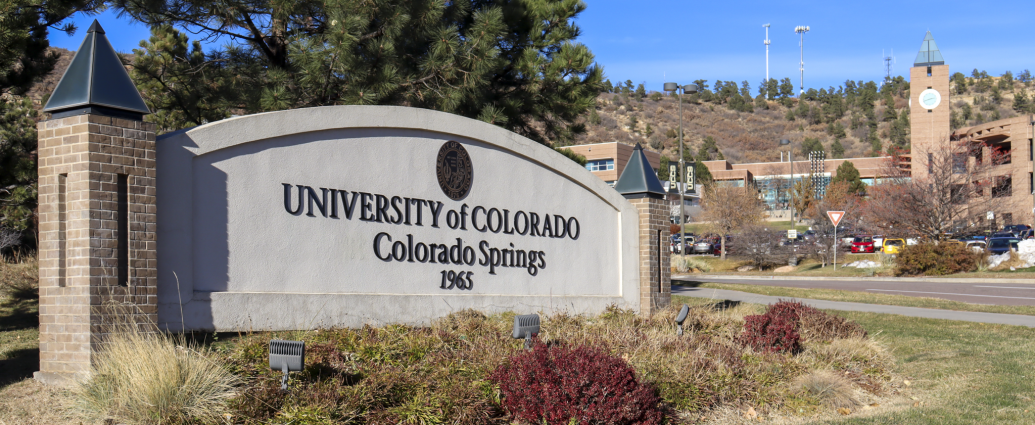
Photo via the Scribe archive.