
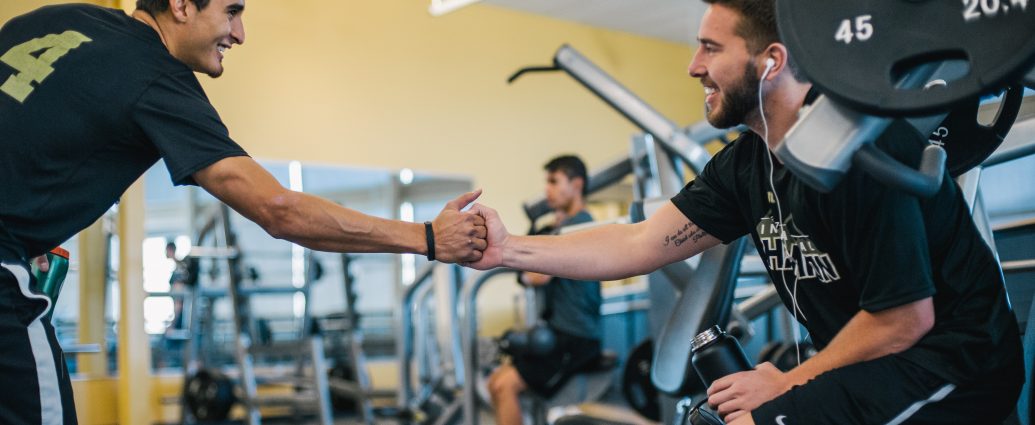
Consistently working out is one of the best habits you can build during your college years. It gives students a healthy stress relief, is shown to be beneficial for both physical and mental health, and improves cognitive functioning, but it would be naïve to ignore the fact that it does have some harmful aspects too.
I started lifting weights six years ago, and I remember feeling super intimidated walking into the gym for the first time. I was too scared to embarrass or hurt myself, so I stayed away.
If you find yourself in a similar situation, you’re in the right place. Here is a comprehensive guide for how to do some of the basic compound lifts in the gym.
Disclaimer
First, by no means am I the biggest guy in the world, or do I claim to have perfect form. I’m just a guy who loves going to the gym and wants to help inexperienced lifters.
Second, safe lifting always starts with some sort of dynamic stretching routine. Get the blood flowing by spending five minutes moving around, targeting the muscle groups you plan on hitting that day. There are plenty of great routines online, so I encourage you guys to do your own research there.
Lastly, don’t be afraid to use the weightlifting belts in the back corner of the Gallogly Recreation and Wellness Center. If you feel like your lower back is being compromised, weightlifting belts are a great way to give you the extra support you might be looking for.
Barbell back squat
Barbell back squats target almost every muscle in your legs, making it super effective for building strength. However, if done improperly, it can cause a lot of strain on your lower back.
Let’s start with the setup. You want to start by setting the rack just below shoulder height, then step under the bar letting it rest on your traps.
Engage and lift with your legs and take one step away from the rack, you want to keep your feet slightly flared which will help keep a natural knee path.
Leg position ultimately comes down to personal preference, but I find that just outside shoulder width works best.
Protect your lower back by bracing your core; think like you’re anticipating a punch in the stomach. Keeping your core engaged will take stress off your lower back and put it into the muscles that you’re trying to target.
After engaging your core, you’re ready to start your descent. Ideally, the bar should travel in a straight vertical line centered over the middle of your foot.
Proper depth is key to a good squat. Getting your hips just below your knee joint is best for gains, but cutting depth won’t hurt too bad either. Regardless, you want to get your hips in line with your knees; doing so will give you the depth you’re looking for.
Stand back up by pushing your legs into the ground while keeping your core braced and just like that you’ve done a proper squat.
Romanian deadlift (RDL)
RDL’s are one of the best movements for targeting your glutes and hamstrings but can be very harmful on your lower back if done incorrectly.
Let’s start with the grip because that’s what can vary the most from person to person. It ultimately comes down to personal preference, but my three favorites are a traditional grip, switch grip, or wide grip. Here’s an article if you want to learn more about the different types of RDL grips but I’ll proceed in this description with a standard grip.
Grab the bar just outside of shoulder width, keeping the weight at a level that you can control. Brace your core again, using the same process you did when squatting.
Starting your descent, keep the bar over the middle of your feet with an equal weight distribution in your feet and a normal feeling of balance.
Hinging at the hip is the most crucial part of this movement. If you’re having trouble getting the proper feeling, there’s an easy way to practice. Standing a step away from a wall, push your hips all the way back until your butt touches the wall.
You still want to keep your weight balanced throughout your feet, but once you can do that right, you’re ready to move on to the bar.
A tip as you hinge is to keep the bar attached to your thighs, which can help keep your weight balanced. After it hits your knee, the bar will remain an inch away from your shins. You know you’ve hit the bottom of your descent once it feels like you can’t push your butt back any further.
Keeping your brace, stand back up by simultaneously pushing your feet into the ground and your hips forward. When back at the top, you should feel good fatigue in your hamstring and glutes. If you’re feeling it in your lower back, try dropping the weight until you feel it in your hamstrings.
At the end of the day, lifting weights is supposed to be fun and something that helps you, not hurts you.
If you find yourself intimidated to go to the gym, just remember that all the experienced weightlifters you see were once beginners trying to figure out how to do their first squat too.
Focus on building good form by keeping the weight manageable and don’t be afraid to learn as you go. If you stay consistent and have fun with it, strength and confidence will come with time.
Mountain Lions in the gym. Photo by the UCCS Photography Database.